
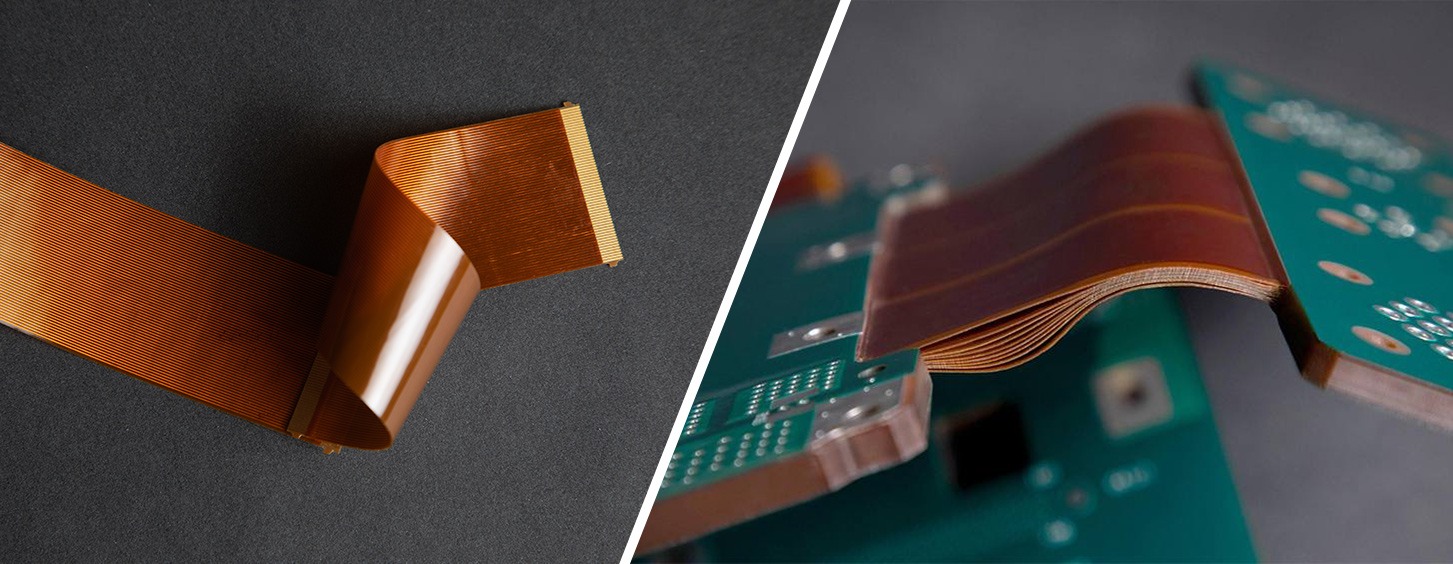
With the rapid growth of modern-day technology, printed circuit boards (PCBs) remain the backbone for nearly all electronic devices. Among the numerous types of PCBs, rigid and flexible PCBs are the most widely utilized, each offering their own set of advantages and applications.
Key Features of a Rigid PCB?
A rigid printed circuit board, also known as a traditional PCB, is built on a rigid base layer that is non-flexible and cannot be bent. These boards feature electrical components mounted on a non-conductive solid substrate, such as fiberglass-reinforced epoxy, that provides strength and rigidity.
Rigid PCBs provide structural integrity and thermal resistance, making these PCBs ideal for applications where dependability and sturdiness are crucial. Rigid PCBs also support various mounting options including surface mount technology (SMT) and through-hole technology (THT), which are chosen depending on the component type, assembly process, and desired mechanical strength.
Rigid boards can also contain multiple layers that allow for complex circuit designs and optimized signal integrity, thermal management, and power distribution.
Key Features of a Flex PCB?
Flexible PCBs (flex PCBs) utilize a flexible base material like polyimide that allows the flex circuits to bend, twist, and fold to fit into compact or irregularly shaped electronics. Due to this capability, flex PCBs are ideal for devices with limited space or subject to vibrations. For better flexibility, manufacturers may use rolled annealed copper instead of electro-deposited copper as the conductive material as well as a process called overlaying instead of using a solder mask to protect the exposed circuitry.
However, flex PCBs have a bending radius that should not be exceeded, as it can damage the traces or substrate; this varies depending on the material and thickness of the flex. Flex PCBs are widely seen in aerospace technology, medical equipment, and wearable devices due to their compact design and durability in extreme environments.
Rigid vs. Flexible PCB: Key Factors for Choosing the Right Board Type
When deciding between a rigid and flex PCB, consider several key factors:
Application: Consider the intended application and function of the PCB as applications requiring structural support typically use rigid PCBs, while applications calling for more mobility and conformity utilize flex PCBs.
Physical Space: Often when available space is limited, flexible PCBs hold an advantage with their ability to bend into various shapes, allowing for efficient space utilization. This is why flex PCBs are usually required for more compact products such as smartphones and wearable tech. However, when there is adequate space available, rigid PCBs may be more reasonable and necessary, as they are seen in larger products such as televisions and desktop computers.
Cost Considerations: Although rigid PCBs have a simpler construction than flex PCBs- making their manufacturing costs generally lower- each cost varies depending on numerous variables regarding the complexity, materials, and intended function of the PCB.
The Pioneer Circuits Advantage
Not only is it crucial to pick the right PCB type, but it is equally important to choose the right manufacturing partner. With over 40 years of experience, Pioneer Circuits offers reliable and high-performance rigid, flex, and rigid-flex PCBs that meet the demands of industries requiring consistent functionality, durable in extreme environments.
Learn more about our capabilities and request a quote today.