Printed circuit boards (PCBs) are essential to nearly all modern electronic devices. Ranging from your smartphone to aerospace technologies, PCBs are fundamental to the reliable and high-speed systems we expect today.
PCBs serve as the foundation for mounting, organizing, and connecting critical electronic components to enable complex circuits to function properly. The main function of a PCB is to facilitate the flow of data and power between components integrated into an embedded system and to establish the functionality of a device.
Real-World PCBs Applications: Consumer Elecronics to Aerospace
Depending on the desired function for the device, there are various PCBs tailored for specific applications.
- Single-sided PCBs are typically found in lower-complexity electronic devices such as calculators and LED lights.
- Double-sided PCBs allow denser circuitry and routing flexibility, commonly found in mobile devices such as smartphones.
- Multi-layer PCBs support compact and higher-performing systems such as laptops and MRI machines.
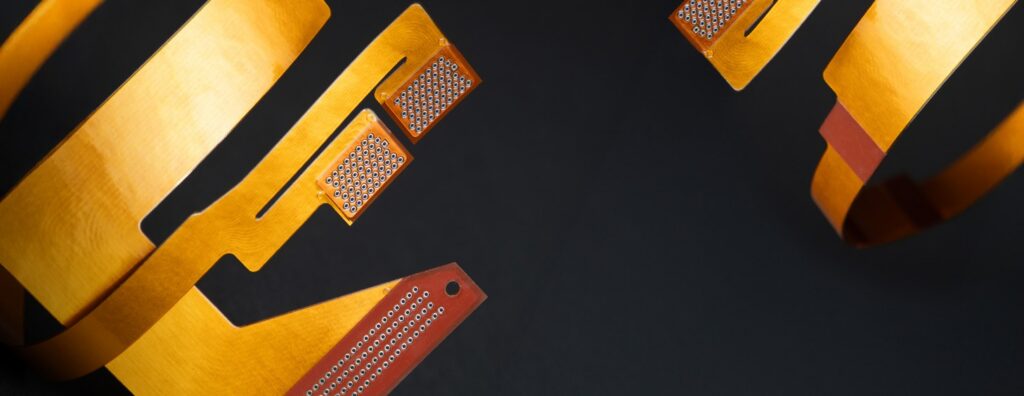
- Flexible PCBs (flex PCBs) allow bending and are used to meet specific form factors, commonly utilized in wearables and foldable devices.
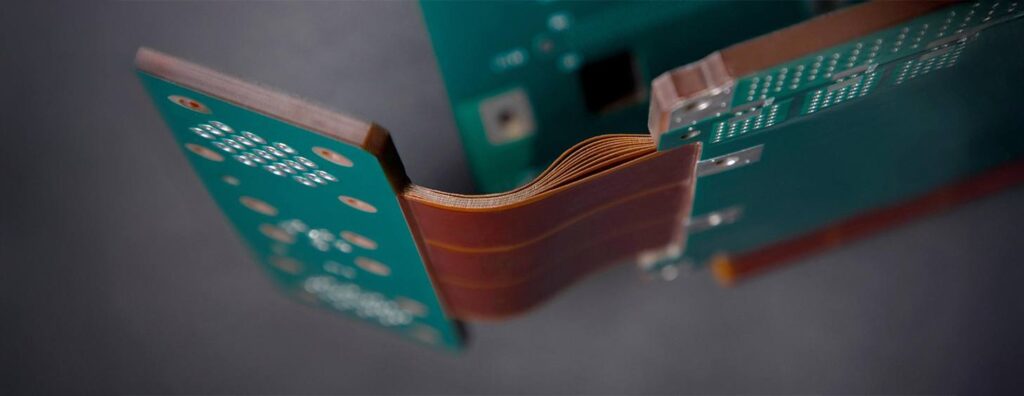
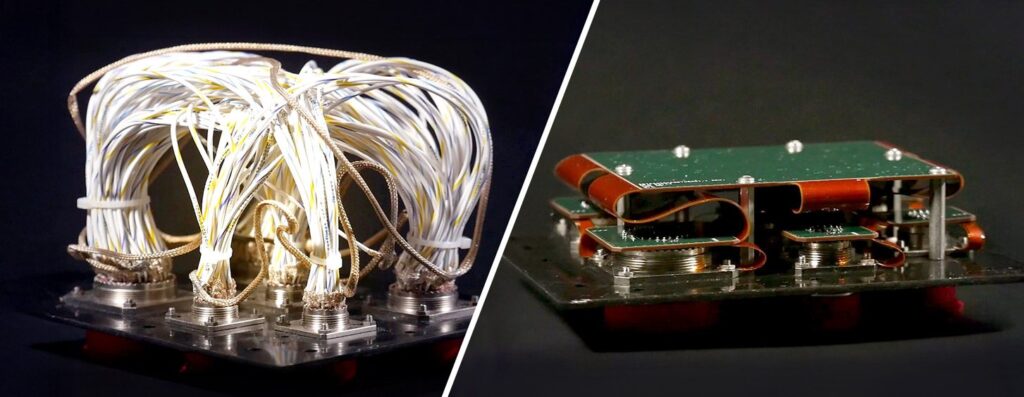
- Rigid-flex PCBs are a combination of rigid PCBs and flexible PCBs that are often found in aerospace and defense systems and medical devices.
Vital Function of a Printed Circuit Boards (PCB) and Why They’re Important
The internal structure of a PCB consists of layers of conductive and insulating materials that are critical in high-performance environments where quality and durability are essential. PCBs operate as the backbone for crucial systems, communications, and devices that support various industries. Although PCBs may seem like a small part, they serve as a vital component in supporting innovation and stability in mission-critical systems.
PCBs serve as the foundation for mounting and interconnecting electronic components, enabling complex circuits to function reliably. They are used in a wide array of applications, including consumer electronics, medical devices, automotive systems, aerospace technology, and industrial machinery. The compact and efficient design of PCBs allows for the miniaturization of devices while maintaining functionality.
Pioneer Circuits’ Mission-Critical PCB Design and Manufacturing for Aeropace & Defense
At Pioneer Circuits, we take pride in engineering innovative printed circuit boards (PCBs) that power some of the most sophisticated systems in aerospace, defense, and space exploration. Over the past year, our flex and rigid-flex PCB assemblies have been integral to high-profile missions, including the United Launch Alliance (ULA) Vulcan rocket and NASA’s Europa Clipper spacecraft – both of which demand unmatched reliability, precision, and performance.
Our expertise extends to critical defense and robotics programs. We designed extended-length flex circuits for the Naval Research Lab (NRL) and DARPA’s advanced robotic arms, enabling capabilities such as satellite inspection, in-orbit repair, and relocation. Pioneer Circuits has also contributed to the Mars Sample Return mission, providing PCB technology for the Sample Transfer Arm aboard NASA’s Sample Retrieval Lander, an essential system that will help bring Martian samples back to Earth for the first time in history.
From deep-space exploration to mission-critical defense applications, these achievements highlight how Pioneer Circuits’ PCB design and manufacturing expertise continues to push the boundaries of electronics innovation. By delivering trusted, high-performance solutions, we help our partners achieve breakthroughs that shape the future of spaceflight, national security, and next-generation technology.